© 2024. Civil Defense Department, Government of Rajasthan. All Rights Reserved
Website last update: 09/08/2025 16:30:47


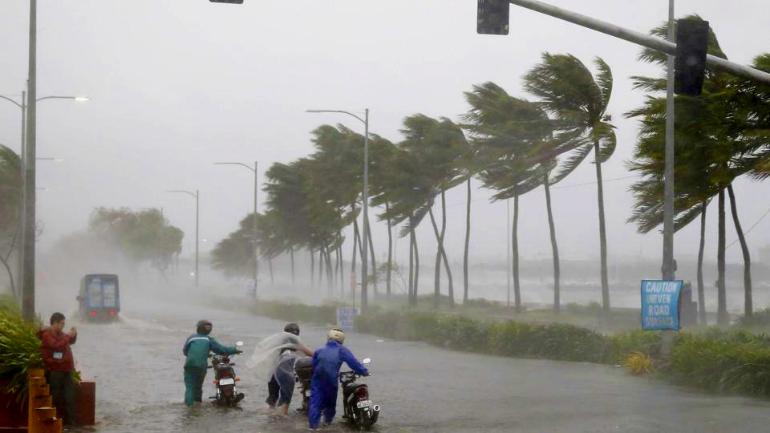
Before the Cyclone season :-
• Check the house; secure loose tiles and carry out repairs of doors and windows
• Remove dead branches or dying trees close to the house; anchor removable objects such as lumber piles, loose tin sheets, loose bricks, garbage cans, sign-boards etc. which can fly in strong winds
• Keep some wooden boards ready so that glass windows can be boarded if needed
• Keep a hurricane lantern filled with kerosene, battery operated torches and enough dry cells
• Demolish condemned buildings
• Keep some extra batteries for transistors
• Keep some dry non-perishable food always ready for use in emergency
The Necessary actions that need to be taken in the event of a cyclone threat can broadly be divided into :
• Immediately before the cyclone season
• When cyclone alerts and warnings are communicated
• When evacuations are advised
• When the cyclone has crossed the coast
When the Cyclone starts : -
• Listen to the radio (All India Radio stations give weather warnings).
• Keep monitoring the warnings. This will help you prepare for a cyclone emergency.
• Pass the information to others.
• Ignore rumours and do not spread them; this will help to avoid panic situations.
• Believe in the official information
• When a cyclone alert is on for your area continue normal working but stay alert to the radio warnings.
• Stay alert for the next 24 hours as a cyclone alert means that the danger is within 24 hours.
When your area is under cyclone warning get away from low-lying beaches or other low-lying areas close to the coast : -
• Leave early before your way to high ground or shelter gets flooded
• Do not delay and run the risk of being marooned
• If your house is securely built on high ground take shelter in the safe part of the house. However, if asked to evacuate do not hesitate to leave the place.
• Board up glass windows or put storm shutters in place.
• Provide strong suitable support for outside doors.
• If you do not have wooden boards handy, paste paper strips on glasses to prevent splinters. However, this may not avoid breaking windows.
• Get extra food, which can be eaten without cooking. Store extra drinking water in suitably covered vessels.
• If you have to evacuate the house move your valuable articles to upper floors to minimize flood damage.
• Ensure that your hurricane lantern, torches or other emergency lights are in working condition and keep them handy.
• Small and loose things, which can fly in strong winds, should be stored safely in a room.
• Be sure that a window and door can be opened only on the side opposite to the one facing the wind.
• Make provision for children and adults requiring special diet.
• If the centre of the cyclone is passing directly over your house there will be a lull in the wind and rain lasting for half an hour or so. During this time do not go out; because immediately after that, very strong winds will blow from the opposite direction.
• Switch off the electrical mains in your house.
• Remain calm.
When Evacuation is instructed : -
• Pack essentials for yourself and your family to last a few days. These should include medicines, special food for babies and children or elders.
• Head for the proper shelter or evacuation points indicated for your area.
• Do not worry about your property
• At the shelter follow instructions of the person in charge.
• Remain in the shelter until you are informed to leave
Post-cyclone measures : -
• You should remain in the shelter until informed that you can return to your home.
• You must get inoculated against diseases immediately.
• Strictly avoid any loose and dangling wires from lamp posts.
• If you have to drive, do drive carefully.
• Clear debris from your premises immediately.
• Report the correct losses to appropriate authorities.